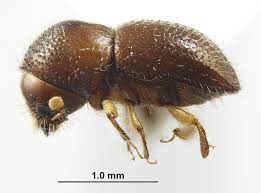

The tiny polyphagous shot hole borer and its associated fungus looks set to become the most damaging biological invasion in South Africa’s urban environments, warns the country’s latest report on biological invasions.







The tiny polyphagous shot hole borer and its associated fungus looks set to become the most damaging biological invasion in South Africa’s urban environments, warns the country’s latest report on biological invasions.
User Rating: 5 / 5

The problem isn’t just that many forests are being lost. It’s also that many remaining forests are getting younger.
User Rating: 5 / 5
Over the past decade-and-a-half, industrial agriculture has caused almost one-third of global forest loss–all of which is permanent, finds a new Science paper. It’s the first study to weigh up the impacts of different forest loss drivers, and while its findings are sobering, they could also go a long towards increasing transparency in the supply chains of major global foods.
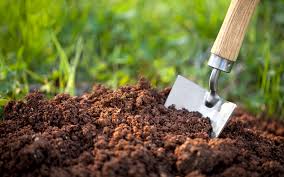
UK government proposals to increase the cost of sending soil to landfill have received strong pushback from the construction industry. But there is a strong environmental case for protecting healthy soils in this way.
User Rating: 5 / 5
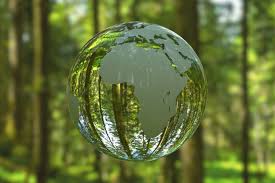
Trees in a forest might look solitary but they are connected underground by a complex network of thread-like strands of fungi, some of which may only be visible to us as mushrooms on the surface.
User Rating: 5 / 5
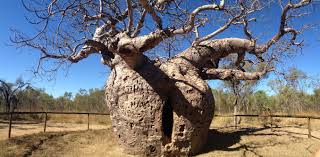
There are eight species of baobab in the world, and they have a surprising distribution. Six are found in Madagascar, an island in the Indian Ocean; one is found on the continent of Africa; and the last is far away in Australia.